A word neither the Geneva Conventions nor the Rome Statute contains
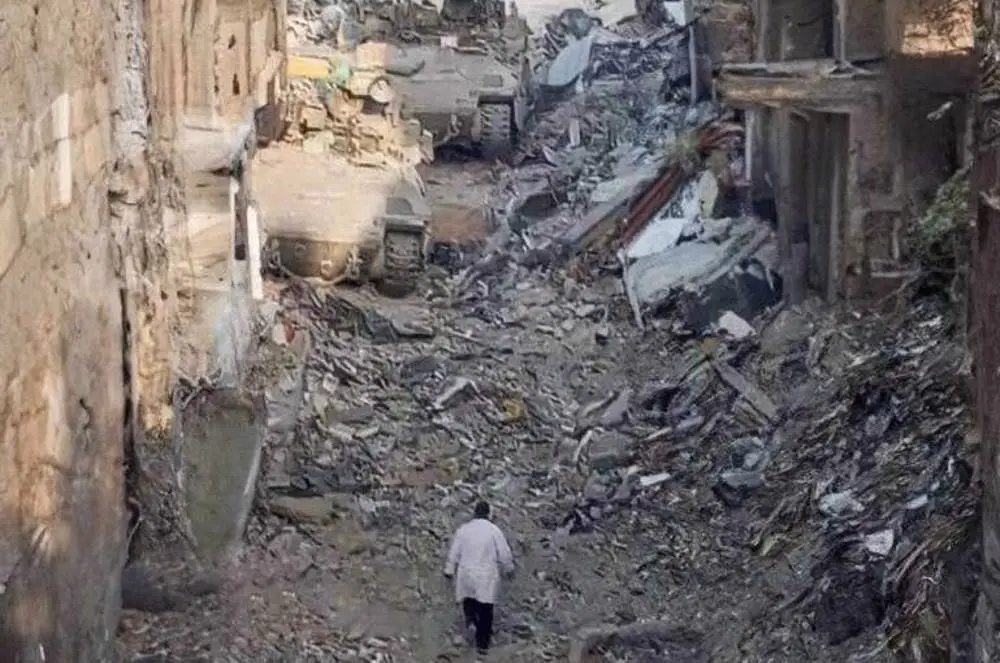
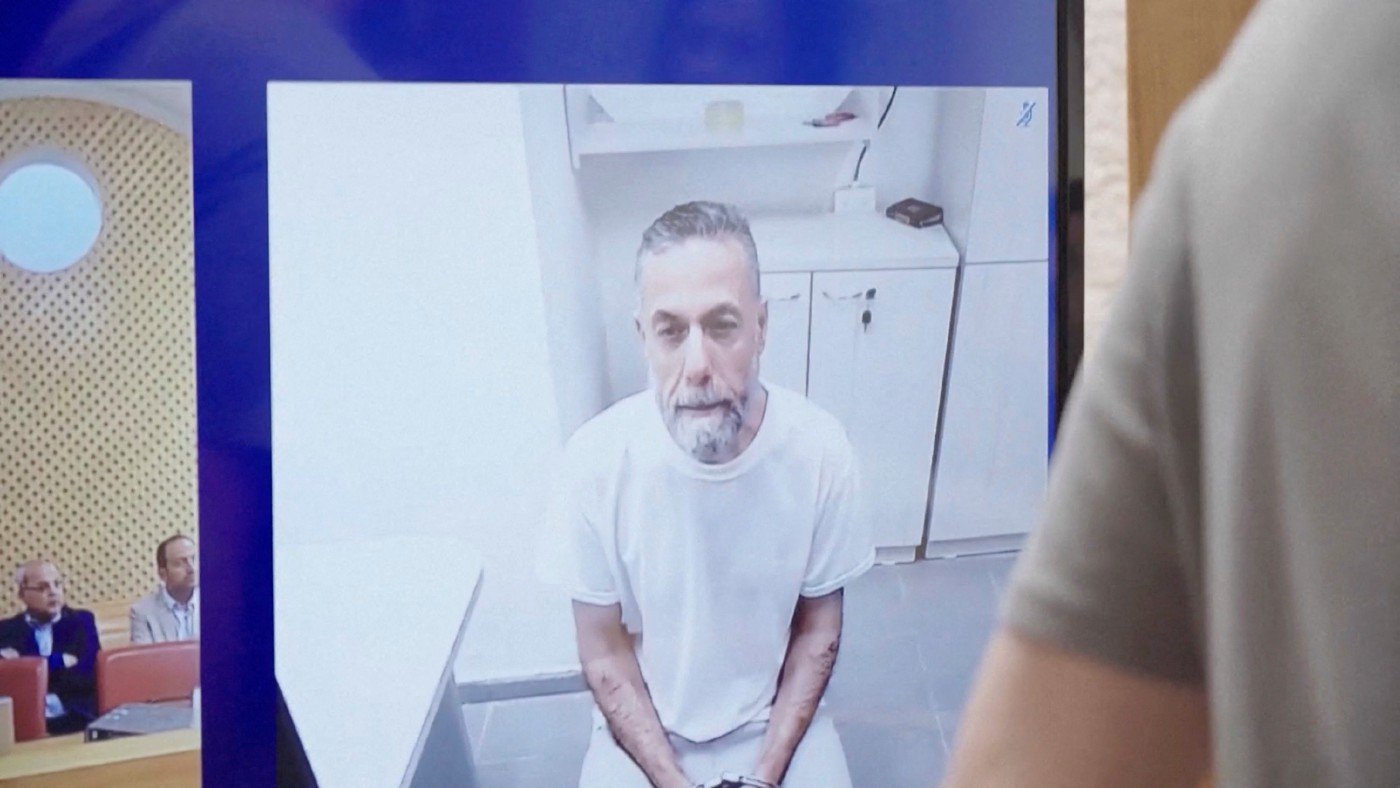
On December 27, 2024, Israeli forces surrounded Kamal Adwan Hospital in Beit Lahiya for the second time in two weeks. Inside, a pediatrician named Hussam Abu Safiya was still treating patients — premature infants, trauma cases, the small number of people who had nowhere else in northern Gaza left to go. By the end of the day, the hospital was empty, its director gone. He has not walked free since.
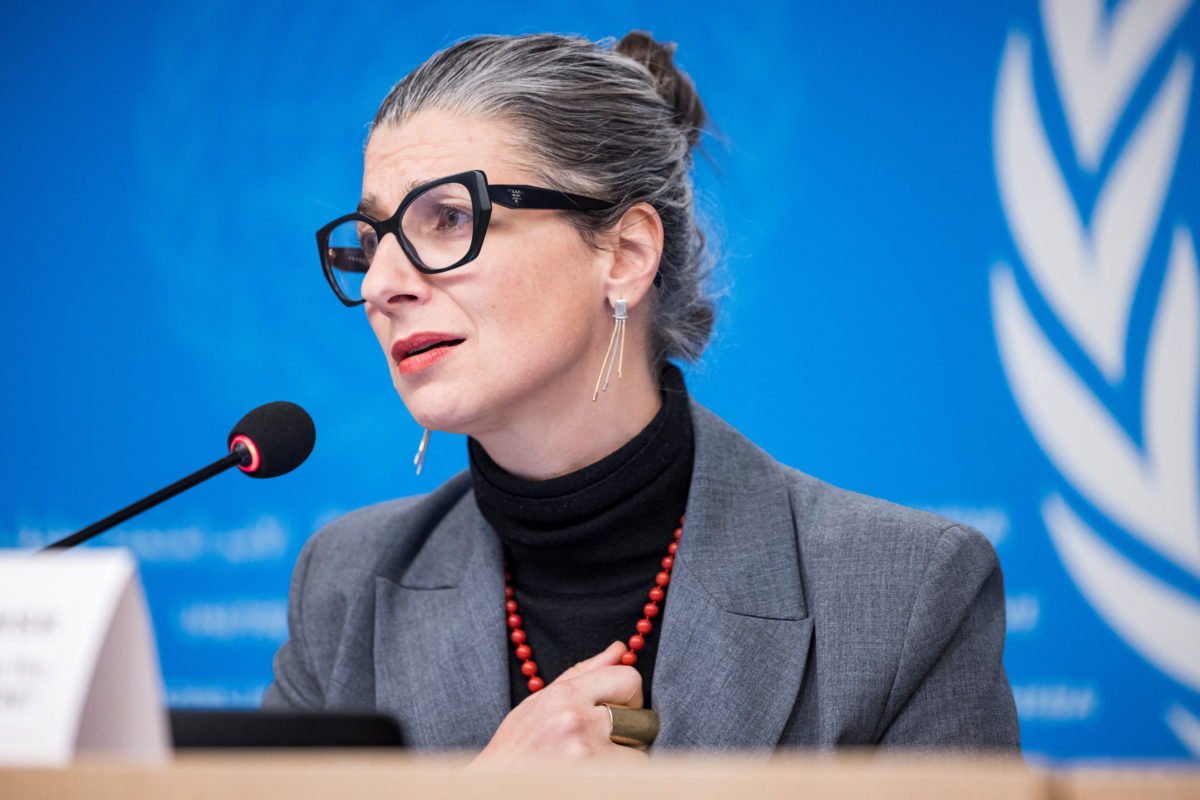
Eight months earlier, in September 2024, Francesca Albanese — the Special Rapporteur on human rights in the occupied Palestinian territory — had already used the word herself, listing it among several "-cide" terms she said Israel stood accused of in Gaza. The term had also begun appearing independently in medical and legal academic literature around the same period. What happened in August 2025 wasn't the coining of a new word — it was something more significant institutionally: Albanese and Tlaleng Mofokeng, the Special Rapporteur on the right to health, jointly and formally adopted the term in an official statement, elevating it from one rapporteur's phrasing to a shared position backed by the UN's dedicated health mandate holder.
The same statement carried the numbers behind the word: by June 2025, the World Health Organization had recorded 735 attacks on healthcare in Gaza since October 7, 2023 — attacks that had killed 917 people, injured 1,411, and damaged 34 hospitals.
Medicide is not a legal term. No court has adopted it, no treaty defines it. It's a compound that entered circulation through Albanese's own usage and independent academic writing before the UN's two health- and Palestine-focused rapporteurs jointly adopted it as their shared characterization. That makes it worth treating carefully — as an interpretation of a pattern, not a verdict. What follows is the pattern itself, claim by claim, with Israel's own stated position included at every step.
Claim, documentation, and legal finding — in sequence
By the end of 2025, the World Health Organization's Health Emergency Appeal reported that all 36 of Gaza's hospitals had sustained damage, that only half were even partially functional, and that just 48% of primary health care centers remained operational — while an estimated 81% of all structures across Gaza, of any kind, had been damaged or destroyed. Eighteen months earlier, in December 2024, the UN Human Rights Office had already documented at least 136 strikes on 27 hospitals and 12 other medical facilities in just the first nine months of the war.
The same December 2024 report described the raid on Al-Shifa Medical Complex — the first major hospital operation of the war — in blunt terms: Israeli forces attacked, withdrew, and left behind mass graves. Investigators later exhumed at least 80 bodies from the hospital grounds, some, the report noted, still attached to medical catheters and cannulas — a detail suggesting they had been patients, not combatants, when they died.
Human Rights Watch's own field interviews point the same direction. Investigators spoke to nine patients and two healthcare workers present during the al-Shifa, Kamal Adwan, and Nasser raids. None of them reported seeing Palestinian fighters inside the hospital compounds during the Israeli operations — a finding HRW notes is consistent with other independent media interviews conducted separately. The Gaza Health Ministry reported that 84 patients died from lack of care during those three sieges alone, not counting anyone killed by shelling or gunfire. UN High Commissioner for Human Rights Volker Türk put the human cost of the pattern in a single image: hospitals meant to be sanctuaries instead "became a death trap."
International humanitarian law does allow hospitals to lose their protection if used for military purposes — but only after due warning has gone unheeded, and even then any attack must still meet the ordinary rules of distinction and proportionality. A justification that is asserted but not substantiated does not meet that bar. That is not this platform's conclusion; it is the UN's own documented finding.
As of July 2025, Healthcare Workers Watch — a Palestinian monitoring group — had compiled a named list of 28 Gazan physicians then held by Israel without charge, out of at least 405 healthcare workers detained since October 2023. The list is not anonymous. It includes full names, ages, hospital affiliations, and days in detention.
Twenty-one of the 28 physicians on the list had by that point been held for more than 400 days without formal legal process; three for more than 600. — Healthcare Workers Watch, July 22, 2025
That is the pattern worth sitting with: "lawful under domestic administrative-detention law" and "arbitrary under international law" are not contradictory findings. Both can be true at once, and both bodies making these findings — Israel's own courts on one side, the UN's human rights machinery on the other — agree on the underlying fact that no charges have ever been filed.
Since October 2023, humanitarian organizations working in Gaza have reported that Israel has restricted or blocked entry of items including anesthesia, insulin, oxygen cylinders, cancer medications, dialysis supplies, ultrasound machines, X-ray machines, scalpels, sutures, and even wheelchairs and crutches — items health workers say they needed for ordinary, non-military medical care. — Physicians for Human Rights, July 9, 2025
In plain terms: the concept of a security-justified restriction on genuinely military-relevant goods is a recognized part of the laws of war. What PHR documented is something narrower and harder to justify on security grounds alone — a restriction regime, applied specifically to Gaza, that treats basic medical consumables as if they carried the same risk as weapons components, with no equivalent anywhere else in the world.
Under the Fourth Geneva Convention, an occupying power owes the population it controls specific, enforceable duties. Article 55 requires it to ensure the population's food and medical supplies. Article 56 requires it to maintain medical and hospital services. Article 59 requires it to agree to relief schemes — food, medical supplies, clothing — whenever the population is inadequately supplied, and to facilitate them "by all means at its disposal."
This is not a contested reading. On October 22, 2025, the International Court of Justice — the United Nations' own highest judicial body — issued an advisory opinion addressing exactly this question.
The Court considered this argument directly and did not accept it as sufficient. Its finding that the population "has been inadequately supplied" is a factual determination, not a rhetorical one, and it triggers an "unconditional" obligation under Article 59 regardless of who is assigned blame for the shortfall. This is the single most authoritative source in this file: not an NGO, not a UN special mandate holder, but the International Court of Justice itself, ruling on the specific legal question of what Israel owes the population of Gaza in medical supplies and services.
Four claims, four replies, four independent findings
The same shape, four times
Ten sources. Four claims. Four Israeli responses, each included in full rather than paraphrased away. And in every case, the same shape: an assertion of military necessity, met by an independent body — the UN's own human rights office, Human Rights Watch's own field interviews, Physicians for Human Rights' own document review, or the World Court itself — finding the assertion insufficient to explain what was actually documented on the ground.
"Medicide" is the word two UN experts chose to describe that shape. Whether or not it becomes a term of art in international law, the underlying record — named doctors, dated strikes, verified export-control documents, a World Court opinion — does not depend on the word to be true.
Four organizations, one assessment
This file has already cited WHO's casualty and facility figures throughout. Three other organizations — representing global emergency medicine, the world's physicians as a professional body, and the guardians of the Geneva Conventions themselves — have each issued their own direct statements on this exact subject.
Four organizations — the UN's own health agency, an operational medical humanitarian charity that has buried its own staff, the global professional body for physicians, and the custodian organization of international humanitarian law itself — arrive independently at the same assessment. That convergence, across organizations with very different mandates and very different relationships to the conflict, is itself part of the evidence.