Documentary Record · 20 named Palestinians · Weeks 1–20 of 139
Gaza Strip
◉Gaza Strip✓ OCHA Flash Updates #1–#122
139 Weeks — Part 1 of 7
One hundred and thirty-nine weeks of war in Gaza. One named Palestinian per week — documented in published reporting, anchored to OCHA primary sources. Part 1 of 7: Weeks 1 through 20, from October 7, 2023 to February 23, 2024. Twenty people. Approximately 29,514 killed.
Account date: October 7, 2023 – February 23, 2024Published June 9, 202640 min read
Verification & Documentation
Primary SourceOCHA Flash Updates #1–#122
Documentation Date2026-06-08
Verification MethodCross-referenced with OCHA primary source texts, Al Jazeera, UNICEF, UNRWA, MSF, HRW, +972 Magazine, Mondoweiss
Content TypeDocumentary Record · 20 named Palestinians · Weeks 1–20 of 139
139 Weeks — Complete SeriesSeven parts · 139 named Palestinians
Each row below represents one week of the war in Gaza. The week number, date range, and defining humanitarian event are always visible. Click or tap any week to open it — inside you will find the OCHA-verified context for that week, a named Palestinian whose story corresponds to it, and a direct link to the primary source where their account was documented.
Every person in this record is named in published reporting. Every week's defining event is drawn from OCHA Flash Updates or equivalent primary institutional sources. No event and no person has been invented or reconstructed. Where a source uses only a first name — as is common in UNICEF and UNRWA field documentation of children — that convention is preserved and noted.
The death toll shown for each week is the cumulative Palestinian death toll as documented by the Gaza Ministry of Health and verified against OCHA Flash Update texts. Figures marked ~ are accepted as consistent with the documented trajectory where a precise OCHA figure for that exact date was not available.
Scale
Between October 7, 2023 and February 23, 2024 — the twenty weeks covered in this part — approximately 29,514 Palestinians were killed in Gaza. That is an average of 1,476 per week, 211 per day, 8.8 per hour. The twenty people documented in this record are twenty of them.
◈Interactive Timeline — Part 1 of 7
Weeks 1–20 · Click any week to open the human story inside it
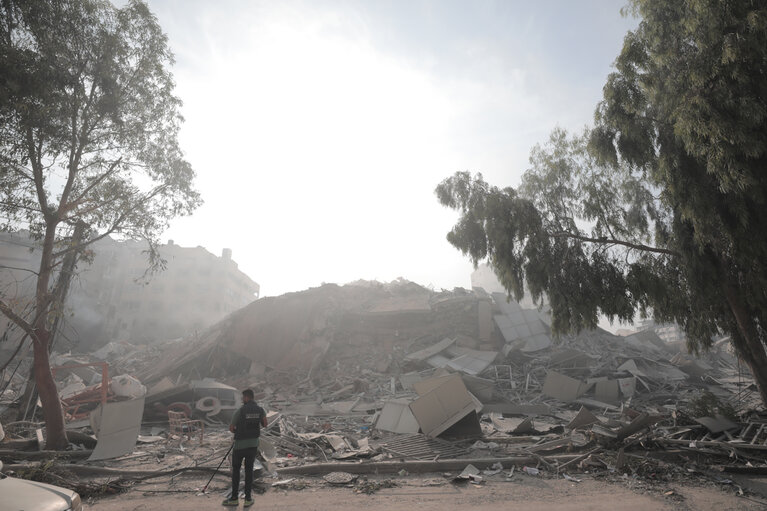
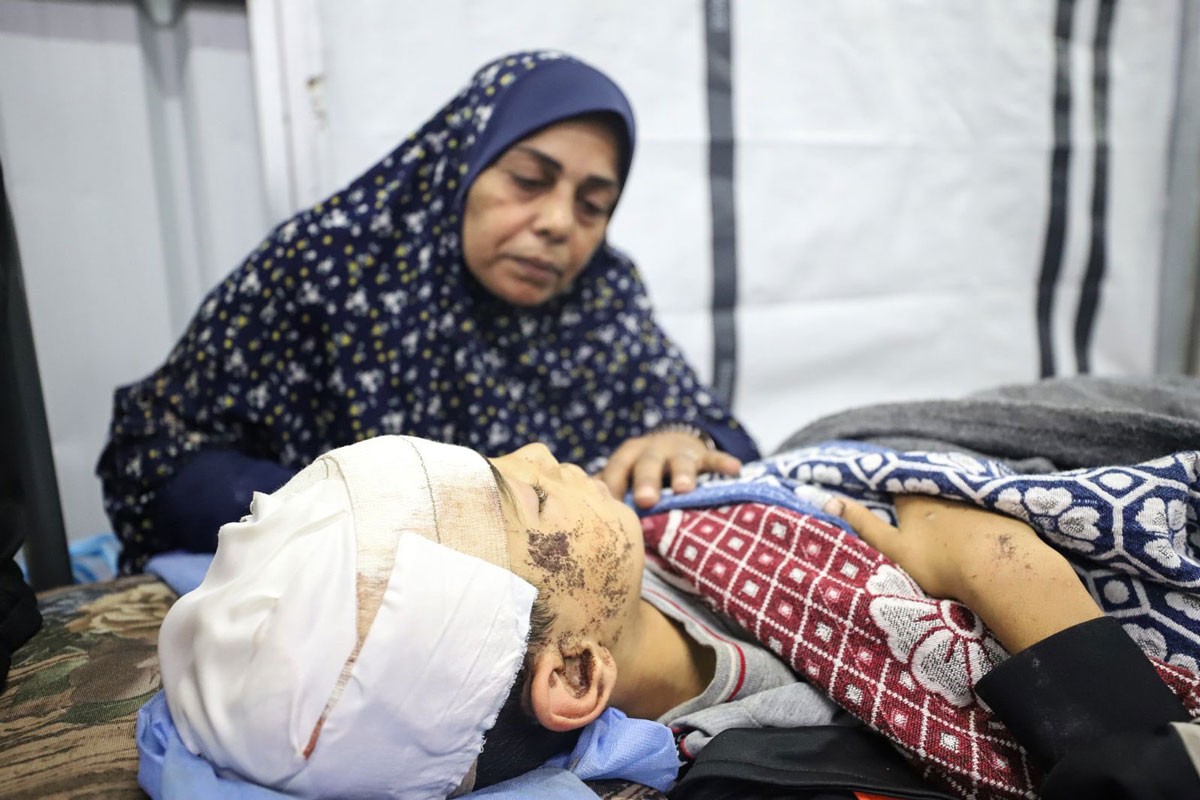
Devastation in the Gaza Strip amid hostilities between armed Palestinian groups and Israeli forces. Photo by UNRWA · OCHA Flash Update #7
Name
Sara al-Khalidi
Age
40
Location
Gaza City, Tal al-Hawa neighbourhood
Identity
Mother of four
Source
Al Jazeera · October 28, 2023 · T4
On the night of October 7, as bombs fell around their home in Tal al-Hawa, Sara al-Khalidi lay on the floor with her four children. She did not know if they would survive the night. She wrote her children's names on their bodies so they could be identified if killed. The next morning she moved her family south to Khan Younis to stay with relatives — one of over 400,000 Palestinians displaced in the first week of the war.
"Since 11 October at 14:00, Gaza has been undergoing a full electricity blackout, which has brought essential health, water and sanitation services to the brink of collapse."
Al Jazeera · "'So world knows': Gaza parents mark children's names on bodies amid bombing" · October 28, 2023
Name
Maha Hosseini
Location
Fled to Zawayda, central Gaza Strip
Identity
Civilian evacuee from northern Gaza
Source
Al Jazeera · October 16, 2023 · T4
Maha Hosseini evacuated from northern Gaza following Israel's order and arrived in Zawayda in central Gaza. She told Al Jazeera that three other families sharing the house she was staying in had already returned to Gaza City despite the bombardment — unable to bear the conditions of displacement in the south. She stayed. The evacuation order had given people 24 hours to move. OCHA documented that 30% of all housing units in Gaza had already been destroyed or damaged by this week.
"At least 30 per cent of all housing units in the Gaza Strip have been either destroyed (12,845), rendered uninhabitable (9,055) or moderately/lightly damaged (121,000)."
Al Jazeera · "Desperate evacuees return to their homes in Gaza City despite Israeli order" · October 16, 2023
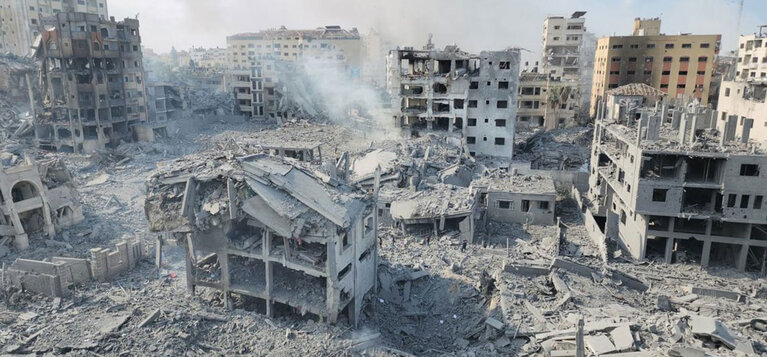
Devastation in Gaza. Photo by UNRWA · OCHA Flash Update #23 · October 29, 2023
Name
Dr. Sara Al Saqqa
Location
Al-Shifa Hospital, Gaza City
Occupation
General surgeon
Source
Mondoweiss · October 25, 2023 · T4
Dr. Sara Al Saqqa gave testimony from inside Al-Shifa Hospital as one-third of Gaza's hospitals had already been forced to shut down. She described operating conditions that had passed the point of crisis: "There is no space — we work in the operating room while patients are packed in the recovery area waiting for a bed. We have to prioritize between people who have a better chance of survival rather than who has it worse." The first aid convoy of 20 trucks had entered Gaza that week — 480 fewer than the daily average before the war.
"This is a worrying sign that civil order is starting to break down after three weeks of war and a tight siege on Gaza." — Tom White, UNRWA Gaza Director
Mondoweiss · "Women in Gaza are facing a healthcare catastrophe under Israeli bombardment" · October 25, 2023
Name
Plestia Alaqad
Age
21
Location
Gaza City — evacuated November 21
Occupation
Palestinian journalist and author
Source
Democracy Now! · New Arab · T4
On October 27, as the telecommunications blackout fell over Gaza, Plestia Alaqad posted from a limited connection: "If we all got killed in Gaza, no one will know." She spent 45 days documenting the war — moving between shelters under bombardment, filming what she saw, posting when connectivity returned. International journalists were barred from entering Gaza. Palestinian journalists like Plestia became the primary witnesses to history in real time. She evacuated to Australia on November 21. Her diary, published as The Eyes of Gaza, documents those 45 days.
"Telecommunication in Gaza, including cellular lines and internet services were largely restored by the morning of 29 October, after being shut down on the evening of 27 October."
Democracy Now! · "Eyes of Gaza: Palestinian Journalist Plestia Alaqad Chronicles Life Under Israeli Bombs" · October 7, 2025 · Book: The Eyes of Gaza: A Diary of Resilience (2025)
Name
Muhammad Abu Al Qoumsan
Location
Jabalia refugee camp
Occupation
Al Jazeera broadcast engineer
Source
Airwars ISPT0783 · October 31, 2023 · T3
On October 31, Israeli airstrikes hit Jabalia refugee camp. At least 21 members of Muhammad Abu Al Qoumsan's family were killed in those strikes. His relative Mahmoud Abu Al Qoumsan documented the deaths: three brothers — Abu Al Thib, Abu Anas, and Abu Firas — along with Abu Firas's wife, their two sons Wasel and Mohannad, their two daughters Nabough and Abrar, and other family members. Jabalia is one of the most densely populated places on earth. Muhammad himself survived. The Airwars incident report names each of the family members killed and documents the social media posts in which the deaths were announced.
"UNRWA has been forced to bury people, including children, in mass graves near its shelters in Gaza, due to the inability to transfer the deceased to cemeteries."
Dr. Ahmed Mokhallalati spoke to Al Jazeera from inside Al-Shifa as Israeli forces surrounded the complex for the fourth consecutive day. "You can hear a lot of gunshots and then you know that the tanks are getting near to Al-Shifa Hospital." He described how the repeated targeting had pushed patients to leave without treatment or surgery rather than risk remaining in the building. He stayed. OCHA and WHO confirmed: Al-Shifa had become non-functional. It was Gaza's largest hospital. 32 premature babies remained in incubators inside.
"The hospital is no longer operational or admitting new patients. 32 babies in critical condition, two people in intensive care without ventilation, and 22 dialysis patients."
Al Jazeera · "Health centres in north Gaza under siege in 'day of war against hospitals'" · November 10, 2023
Name
Salwa Khattab
Location
UNRWA school shelter, Gaza
Identity
Displaced civilian sheltering with family
Source
Al Jazeera · October 28, 2023 · T4
Salwa Khattab was sheltering with her family in an UNRWA school when the ceasefire pause was announced — bringing the first silence in 48 days of continuous bombardment. She had already witnessed an UNRWA school in Al-Maghazi refugee camp bombed, killing displaced people sheltering inside. "This war is targeting everyone. We do not feel safe or assured here. Look what Israel did to the school in the al-Maghazi refugee camp — they bombed and killed a number of displaced people." The pause that began November 24 lasted eight days before collapsing on December 1.
"A humanitarian pause to start on 24 November has been agreed between Israel and Hamas. The humanitarian pause has allowed for increased humanitarian access to Gaza, including to the north."
Al Jazeera · "'So world knows': Gaza parents mark children's names on bodies amid bombing" · October 28, 2023
Name
Dr. Hassan
Age
49
Location
Fled Jabalia → Khan Younis
Identity
Doctor, displaced with 36 family members
Source
Human Rights Watch · November 2024 · T2 · Name pseudonymised per HRW methodology
Dr. Hassan fled his home near Jabalia on October 11, following evacuation orders, with 36 family members. They found shelter in Khan Younis — which Israel had designated as safe. When the ceasefire collapsed on December 1 and bombardment resumed in Khan Younis, he described the logic that had governed every decision since October 7: "Once I heard the evacuation order to go south, my first reaction was: I'm not leaving. It is not an option to leave everything I have worked for — but then the bombs started and our houses were being destroyed. I needed to protect my family." He remained in Khan Younis through multiple further rounds of displacement.
Human Rights Watch · "Hopeless, Starving, and Besieged: Israel's Forced Displacement of Palestinians in Gaza" · November 14, 2024
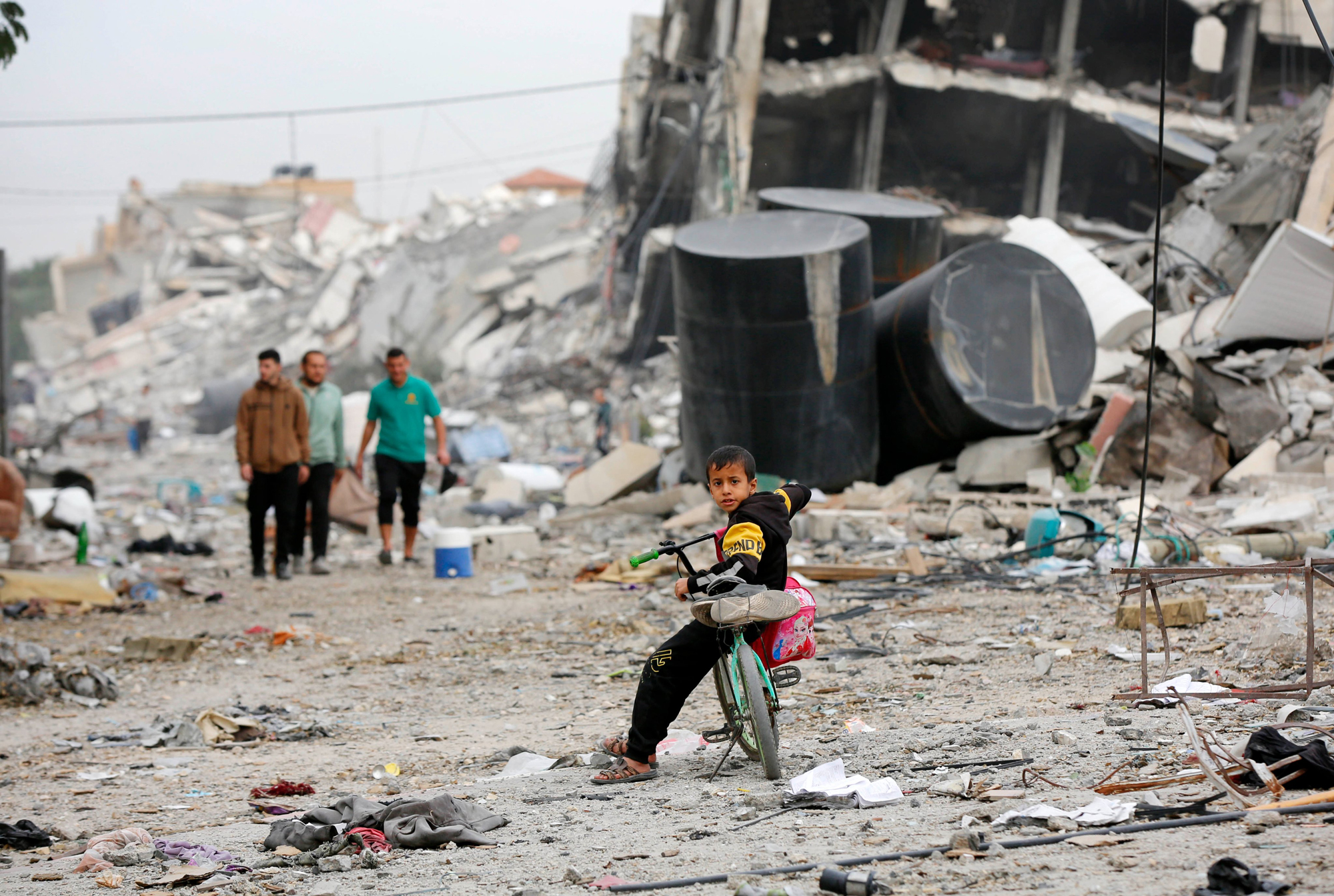
Nowhere is safe in Gaza. Photo by UNRWA · OCHA Flash Update #60 · December 5, 2023
Name
Seham al-Athamneh
Age
50
Location
Displaced — southern Gaza
Identity
Grandmother, displaced with grandchildren
Source
Al Jazeera interactive · March 2024 · T4
By the week the US vetoed the ceasefire resolution, Seham al-Athamneh had already been forced to flee up to eight times. She fled each time with her grandchildren — packing whatever could be carried, moving to wherever the bombs had not yet reached. She described the exhaustion of each displacement, the degradation of arriving somewhere new with nothing: "They didn't leave a place that they didn't bomb or leave any place we can safely shelter in. Humiliation." She was running out of places to go.
"Nowhere is safe in Gaza. Not hospital, not shelters, not refugee camps. No one is safe. Not children. Not health workers. Not humanitarians." — Martin Griffiths, UN Emergency Relief Coordinator
Al Jazeera Interactive · "How Israeli attacks on Gaza have pushed more than 1.5 million people into Rafah" · March 2024
Aid delivered to Al Ahli hospital on 9 December 2023 in a high-risk mission to northern Gaza. Active shelling and artillery fire was noticed nearby. Photo by WHO · OCHA Flash Update #65
Name
Samer Abu Daqqa
Age
45
Location
Khan Younis
Occupation
Al Jazeera cameraman — 20+ years at the Gaza bureau
Identity
Belgian-Palestinian · Father of four
Source
Al Jazeera · CPJ · December 15, 2023 · T4
On December 15, Samer Abu Daqqa was filming near the Ibn Rushd school in Khan Younis when he was fatally wounded in an Israeli drone strike. He was left to bleed for over four hours — Israeli forces blocked the ambulance dispatched to evacuate him. He died of his injuries. Samer had been with Al Jazeera's Gaza bureau for more than 20 years. He was 45. He was a father of four. He was Belgian-Palestinian. The Committee to Protect Journalists documented his killing. By this week, OCHA recorded that at least 97 journalists had been killed in Gaza since October 7 — the highest documented death toll for media in any conflict in recent history.
"On 9 and 10 December, Israeli forces reportedly detained hundreds of men and boys staying in public spaces, schools serving as shelters for internally displaced persons as well as private homes. Reportedly, detainees were stripped to their underwear, handcuffed, and ordered to sit on their knees."
Al Jazeera · CPJ documentation · December 15–16, 2023 · Khan Younis
Name
Shaima
Age
8 years old
Location
Rafah, southern Gaza Strip
Source
UNICEF · Photo by UNICEF/Zagout · December 2023 · T1 · First name only — UNICEF field documentation practice for children
In December 2023, as the death toll passed 20,000 and diarrhea cases in children had risen 50% in a single week, UNICEF field teams documented Shaima — an 8-year-old girl — waiting in a crowd outside a charitable hospice in Rafah that distributed free food. She had been waiting for two hours. She told the UNICEF field team: "I've been waiting here for two hours, but I haven't gotten any food. My mother and my little sister are waiting for me. They haven't eaten since yesterday." UNICEF's January 5, 2024 report described the "deadly triple threat" facing Gaza's children: rising disease, collapsing nutrition, and unrelenting bombardment.
"Children under five are at high risk of dying from diarrhea, respiratory infections and other diseases due to the destruction of health and WASH infrastructure."
UNICEF · "Intensifying conflict, malnutrition and disease in the Gaza Strip creates a deadly cycle" · January 5, 2024 · Photo: UNICEF/Zagout · December 2023
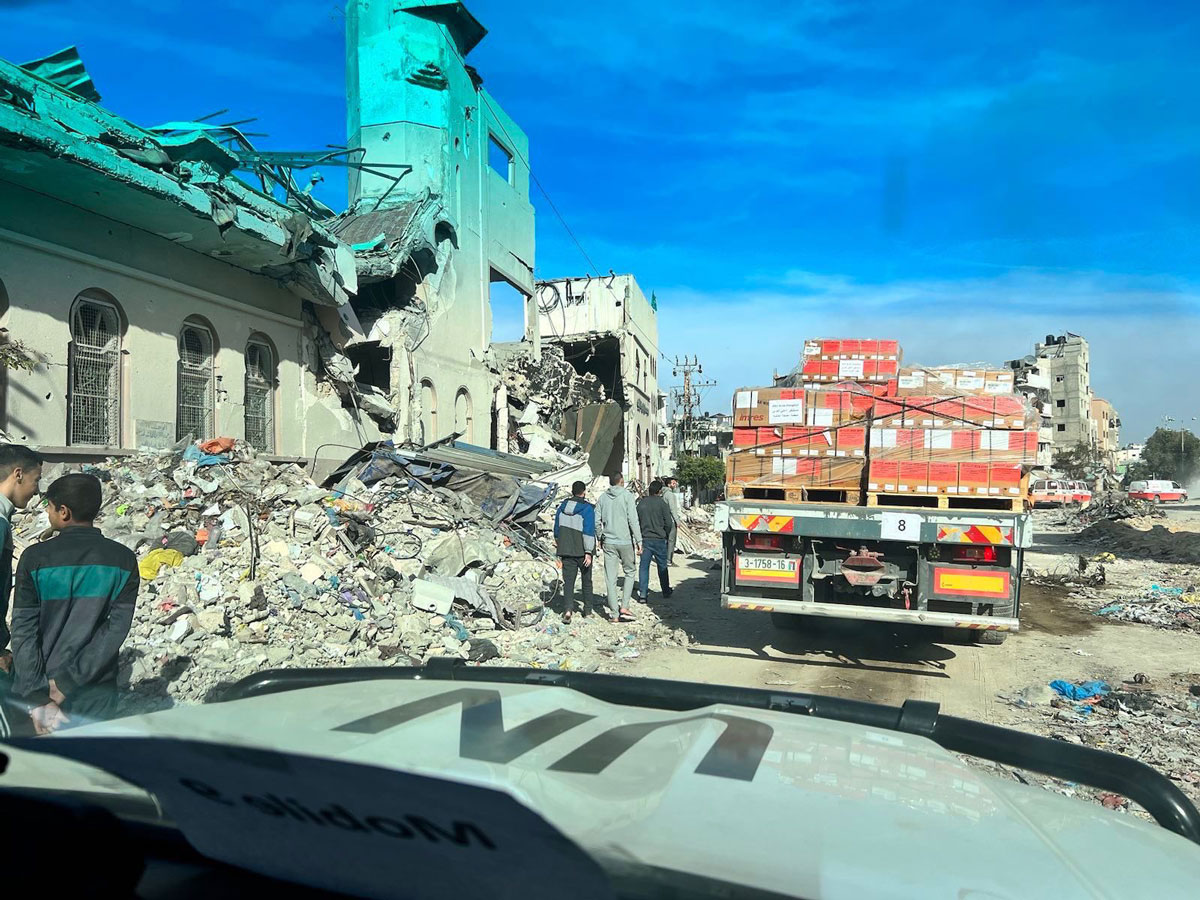
In Gaza, the humanitarian community is working relentlessly to save lives, but the conditions for a meaningful aid operation are not there. Photo by WHO · OCHA Flash Update #81 · December 30, 2023
Name
Jeries Sayegh (father, 68) · documented by his son
Age
68
Location
Holy Family Church compound, Gaza City
Identity
Palestinian Christian · sheltering since October 7
Source
Al Jazeera · November 9, 2024 · T4
The Sayegh family had been sheltering at the Holy Family Church compound in Gaza City since the beginning of the war. On December 21 — four days before Christmas — Jeries Sayegh, 68, suffered a heart attack inside the compound. He had witnessed an IDF sniper shoot and kill two Christian women as they walked between buildings in the compound. There was no medication left. Ambulances were not allowed in by the IDF. He died. His son told Al Jazeera: the church sheltered dozens of Christian families who had nowhere else to go, in a compound that was also under fire. Christmas 2023 in Bethlehem — the city where it is observed — was cancelled for the first time in living memory.
Al Jazeera · "Palestinian Christians despair as Gaza homeland destroyed by Israel's war" · November 9, 2024
Name
Um Muhammad
Location
UNRWA shelter, Gaza City
Identity
Displaced mother — prepares food for 11 family members
Source
UNRWA field documentation · UN News · T1
Um Muhammad — her name means "mother of Muhammad," the name she uses — was sheltering at a UNRWA facility in Gaza City, preparing food daily for 11 family members as catastrophic hunger spread across the strip. She still had some flour while most families nearby had already run out. She described to UNRWA field staff the shame she felt at having any food at all when children from neighboring families came asking: "When I knead and bake, I feel very ashamed of myself, so I distribute some bread to the children who come asking for a piece of bread. We eat one meal a day, dividing bread among each person daily. We eat canned goods, lentils, and rice."
UNRWA field testimony · cited in UN News · "Gazans face hunger crisis as aid blockade nears two months" · April 2025
Name
Dr. Hussam Abu Safiya
Location
Kamal Adwan Hospital, Beit Lahia, northern Gaza
Occupation
Acting hospital director — last functioning hospital in northern Gaza
Source
Britain Palestine Project · T3
As the ICJ heard South Africa's genocide case and as zero fuel remained at northern Gaza hospitals, Dr. Hussam Abu Safiya became acting director of Kamal Adwan Hospital after its previous director was detained. He refused to leave despite the hospital being reduced to rubble around him. He reopened it each time it was forced to close. His nurse Rawiya Tanboura, 32, described his reasoning: "Dr. Hussam felt it was impossible not to have a hospital in the north. I think he was afraid that every person that would die in the north would die because he left." He was arrested by Israeli forces in January 2025 following an 80-day siege of the hospital — the last such facility in northern Gaza.
Britain Palestine Project · "The continuing disappearance of Gaza's Dr. Hussam Abu Safiya" · September 2025
Name
Juliette Touma
Role
UNRWA Director of Communications
Location
Gaza crossings / Jerusalem
Source
CNN · February 21, 2024 · T4
Juliette Touma — UNRWA's Director of Communications — documented to CNN the systematic obstruction of aid convoys to northern Gaza during this week. Half of UNRWA's mission requests to the north were being rejected. Those that were approved faced additional barriers: "Because of the level of desperation in Gaza, people would see an aid convoy, they would come to the aid convoy, take the stuff from the aid convoy. By the time we get the approval, the aid convoy is empty." The main humanitarian route into northern Gaza had been designated along a road with a large crater. Aid workers were operating in conditions where approval to move did not mean safety to move.
CNN · "Israeli forces fired on food convoy in Gaza, UN documents and satellite analysis reveals" · February 21, 2024
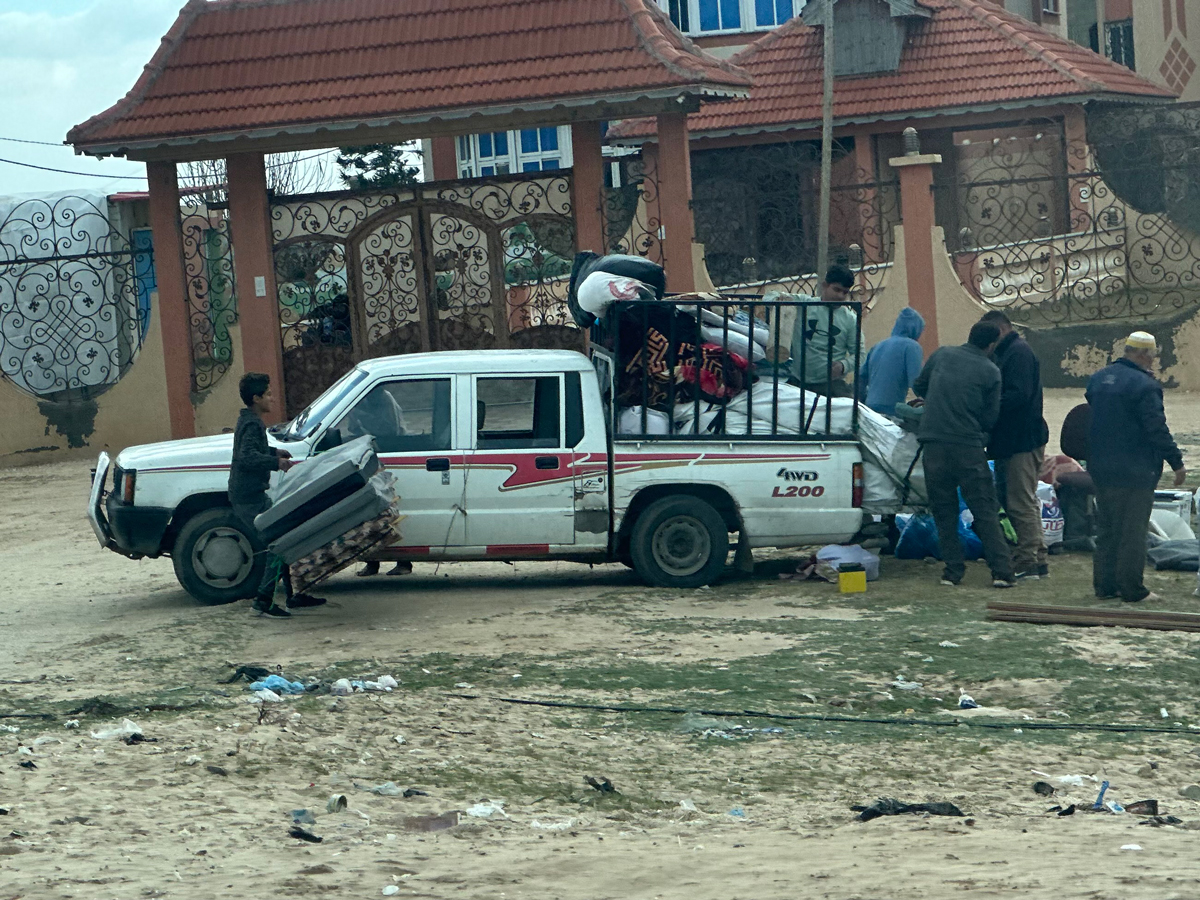
More people are fleeing hostilities or following evacuation orders as intense fighting continues in Khan Younis. Photo by OCHA · Flash Update #104 · January 28, 2024
Name
Salam Al-Sinwar
Location
Rafah — tent in Philadelphi Corridor border area
Identity
Displaced mother — husband and four children aged 3, 7, 10, 12
Source
+972 Magazine · January 15, 2024 · T3
Salam Al-Sinwar was sheltering in a tent in Rafah with her husband and four children as the ICJ issued its provisional measures ruling and Western governments suspended UNRWA funding. She had fled Gaza City due to bombardment, spent time in Khan Younis with relatives, then moved to Rafah as Israeli ground forces advanced. She could not afford the $2,000/month rent for an apartment — exorbitant prices caused by displacement demand. Her 2-year-old son Kenan kept asking for milk she could not get him. "I am struggling to provide my children with food and water." She was one of approximately one million people in Rafah — a city built for 275,000.
+972 Magazine · "'Tents everywhere' as Rafah struggles to hold a million Palestinians" · January 15, 2024 · Photography by Mohammed Zaanoun
Name
Hind Rajab
Age
6 years old
Location
Tel al-Hawa, Gaza City
Date killed
January 29, 2024 · Body found February 10
Source
PRCS · Washington Post · Forensic Architecture · OHCHR · T1/T2/T4
On January 29, 2024, Hind Rajab was travelling with her uncle's family through Tel al-Hawa when Israeli forces fired on their car. Five family members were killed. Hind survived — alone among the dead — and called the Palestinian Red Crescent Society for help. Her 15-year-old cousin Layan also survived briefly, describing an approaching tank on the phone before she too was killed. Hind remained in contact with PRCS dispatchers for over three hours. A PRCS ambulance was dispatched after its route was coordinated with and notified to the IDF. The ambulance was struck and destroyed. Both paramedics — Yousef Zeino and Ahmed Al-Madhoun — were killed. Hind's body was found 12 days later. The UN OHCHR stated in July 2024 that the killing may amount to a war crime.
"The killing of five-year-old Hind Rajab, her family and two paramedics may amount to a war crime. The absence of proper investigation and accountability, more than five months after the tragic killing, may in itself amount to a violation of the right to life."
UN OHCHR · "Gaza: Killing of Hind Rajab and her family — a war crime too many, warn experts" · July 19, 2024 · Washington Post investigation · Forensic Architecture findings
Name
Umm Badr Abu Salme
Location
Rafah — tent camp
Identity
Displaced civilian — moved to Rafah following Israeli army orders
Source
Al Jazeera · February 13, 2024 · T4
Umm Badr Abu Salme moved her family to Rafah because the Israeli army had told people it would be safer there. Now, with 1.5 million people crowded into Rafah and an imminent Israeli ground offensive announced, she was being told to leave again. "We came to Rafah, and now they are telling us to leave." She told PBS — cited by Al Jazeera — that she intended to stay regardless. There was nowhere else to go. OCHA Flash Update #114 documented 300 medical staff, 450 wounded, and 10,000 displaced people at Nasser Hospital exposed to catastrophe amid fuel and medicine shortages.
"300 medical staff, 450 wounded and 10,000 displaced people at Nasser hospital are exposed to a health and humanitarian catastrophe amid a severe shortage of fuel, anesthesia, as well as intensive care capacity."
Al Jazeera · "'There will be massacres': Palestinians in Rafah speak of their fears" · February 13, 2024
Name
Dr. Nahed Abu-Teima
Location
Nasser Hospital, Khan Younis
Occupation
Director, Nasser Hospital — largest hospital in southern Gaza
Source
BBC Arabic · Al Jazeera · February 15, 2024 · T4
As Israeli forces raided Nasser Hospital on February 15, Dr. Nahed Abu-Teima told BBC Arabic that patients in critical condition were being left behind. She described the situation as "catastrophic." The hospital's generators were stopped when Israeli forces entered — five patients in intensive care died when their oxygen was cut off. Seven Palestinians had been killed by sniper fire in the hospital courtyard on February 12. On the same day, February 10, Hind Rajab's body was found in the car where she had been killed twelve days earlier. MSF staff inside Nasser described what they witnessed: the orthopaedic department had been shelled the night before, killing one person and injuring eight.
BBC Arabic interview · Al Jazeera · February 15, 2024 · MSF first-hand account: msf.org/gaza-how-israeli-army-besieged-and-attacked-nasser-hospital
Name
Yasmin
Location
Khan Younis area — tent camp
Identity
Displaced mother — son being treated at Nasser Hospital for tent-related infections
Source
MSF/Doctors Without Borders · field documentation · T3 · First name only — MSF field documentation practice
In the week that WFP suspended food distributions to northern Gaza, Yasmin was spending most of her time at Nasser Hospital where her son was being treated for infections caused by living in a tent without diapers or proper clothing. She described to MSF field staff what life in the tent camp meant for her children: "I have no diapers for my son. I do not even have suitable clothing for him; I must use a plastic bag, and this exposes his skin to more infections and rashes. Living in a tent is exposing my children to extreme conditions, and they are sleeping without even a proper bed. My son is always coughing." This was Week 20 of the war. It would continue for 119 more.
"The nutrition crisis in the northern sectors deteriorates rapidly, with an increasing proportion of young children displaying signs of severe wasting and acute malnutrition due to systemic aid constraints."
Doctors Without Borders/MSF · "Conditions in Gaza are causing severe health issues for Palestinian children and babies" · field documentation from this period
Al Jazeera · Mondoweiss · +972 Magazine · Airwars · BBC Arabic · CPJ · Britain Palestine Project
Documentation period
October 7, 2023 – February 23, 2024 · Last verified June 8, 2026
Content type note
Human Account — documents the reality of named individuals during a documented period of war. All events verified against OCHA primary source texts.
⚠Limitations of this record
This record documents twenty named Palestinians across twenty weeks. It is not comprehensive — it is a selection. For each week, one person was chosen whose documented story corresponds to the week's defining humanitarian event. The twenty people here represent millions. Death toll figures marked ~ are accepted as plausible based on the documented trajectory where a precise OCHA figure for that exact date was not available. Two people in this record — Dr. Hassan (Week 8) and Yasmin (Week 20) — are documented by first name or pseudonym per the source organisation's field documentation practice. This is noted in each case. All other people are documented by their full names as given in the primary source.
Continue the record139 Weeks — Part 2 covers February 24 to July 13, 2024